
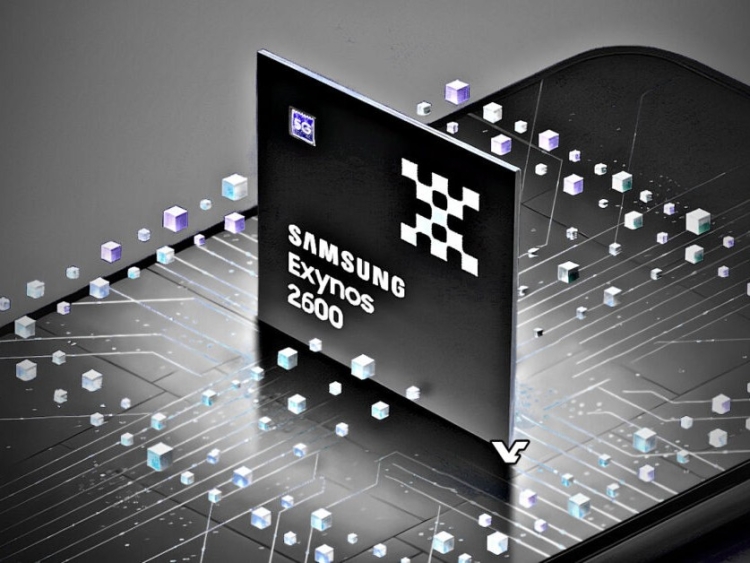
The turnaround comes from Samsung’s Heat Pass Block technology, or HPB, which has quietly delivered a sizeable drop in operating temperatures and caught the eye of rival chip designers.
Samsung Foundry reworked the Exynos 2600 package by abandoning its old approach of stacking DRAM directly on top of the application processor.
Instead, Samsung placed a copper-based HPB heat sink directly on the processor and shifted the DRAM to the side, thereby changing the heat flow entirely.
Because the heat sink sits in direct contact with the chip, heat is dissipated far more efficiently, resulting in average temperatures around 30 per cent lower than those of the previous Exynos generation.
According to South Korea’s ET News, Samsung now plans to offer HPB packaging to external customers, including Qualcomm and the Fruity Cargo Cult Apple.
That is a notable pivot given that Job’s Mob ditched Samsung for TSMC with the A10 chip in 2016, while Qualcomm moved its flagship Snapdragon production to Taiwan with the Snapdragon 8 Gen 1 Plus in 2022.
Thermals remain a sore point for Qualcomm, with the latest Snapdragon 8 Elite Gen five showing worrying power draw figures.
Recent testing put the chip at 19.5 watts board power compared with 12.1 watts for the A19 Pro in the same benchmark.
The problem appears to lie in the clock speeds of the Snapdragon 8 Elite Gen five’s six performance cores, which are pushed hard to chase peak numbers.
While the final CPU layout of the Exynos 2600 has yet to be confirmed, a leaked internal benchmark showed its prime core running just 4.6 per cent faster than the Snapdragon’s performance cores.
That relatively modest uplift, combined with HPB’s improved heat dissipation, makes Samsung’s packaging approach look like an obvious fit for Qualcomm’s future application processors.
After years of Exynos chips cooking themselves into irrelevance, Samsung may have stumbled on a fix that others can no longer ignore.